

Grand Tour de Catalunya Gravel: Catalan gravel cyclotourism to a next level
Catalonia’s new gravel Grand Tour spans 42 stages, grouped into five ‘sections’. The circular route of some 2,500 km links Barcelona, the Mediterranean coast, the inland plains, the Pyrenees and the landscapes of Girona before returning to the city. It is an adventure that promises a cycling experience even locals may never have imagined on their own doorstep.
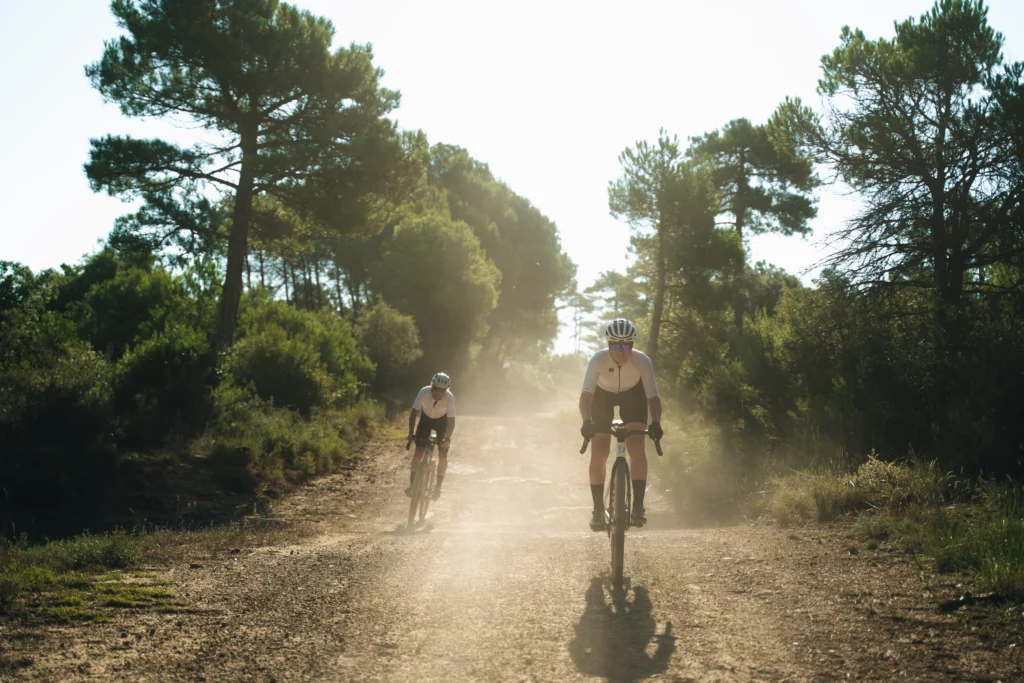
The idea has its roots in the original Grand Tour de Catalunya, a route first conceived for motor vehicles. The gravel version was developed by the Catalan Tourist Board, and it is designed to be flexible: it can be ridden in one go or over a series of shorter trips, at whatever pace the rider chooses. Whether ridden hard or at a more relaxed pace, riders will enjoy rural tracks,
secondary roads and existing cycling infrastructure while discovering the region’s history, culinary traditions and beautiful nature. The resulting route is around 60% unpaved and includes more than 44,000 metres of climbing. Where suitable tracks exist, they take priority. Where they do not, the route uses quieter secondary roads, greenways and cycle lanes.
Tram 1: Barcelona – Tarragona
Barcelona’s iconic Plaça Catalunya is the official starting point for this massive gravel adventure. During stage 1 of the Grand Tour de Catalunya Gravel, the city gives way to the green slopes of Collserola, where views back over the skyline are a reminder of how close the countryside is to the urban area. Beyond the city, the route heads towards Terrassa and the inland landscapes of the Vallès Occidental and Bages. The Carretera de les Aigües is a familiar escape for local cyclists, but for those riding the route it is just the beginning.
On the way to Tarragona there are forest tracks, open farmland and long approaches to the mountains of Sant Llorenç del Munt and l’Obac. The climb towards Coll d’Estenalles brings the distinctive shapes of La Mola and Montcau into view. Further south, the route skirts the Sant Ponç reservoir and passes near Montserrat, whose sawtooth outline is one of Catalonia’s most recognisable sights.
Riding among vineyards and sea breeze
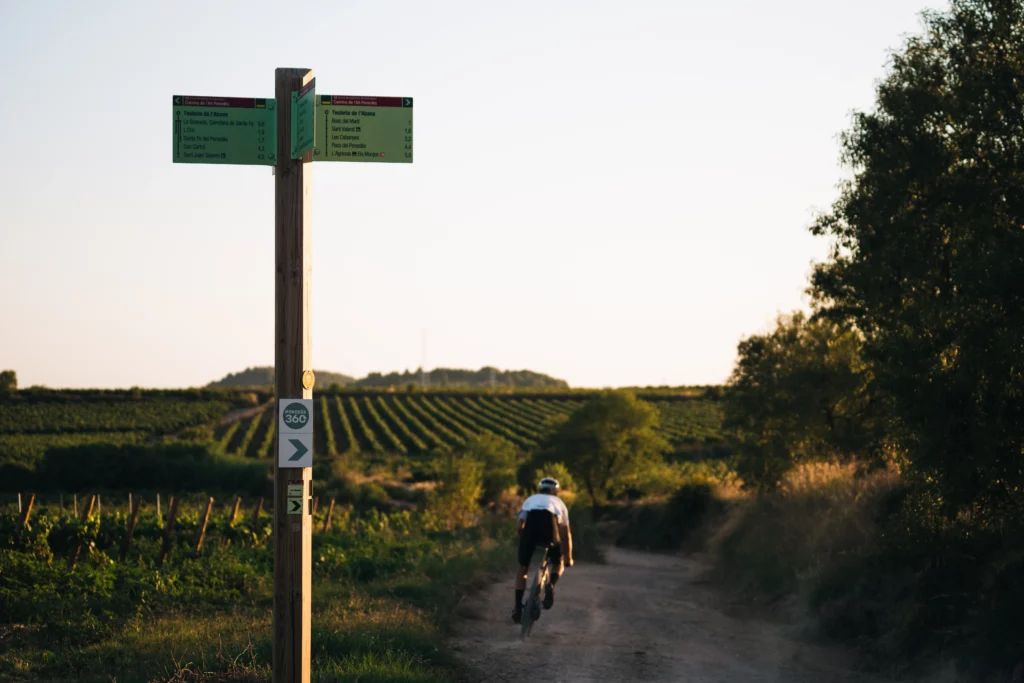
The character of the landscape changes as the route approaches the Penedès. With the region’s wine and cava traditions close at hand, the tracks run between vineyards and rural settlements. This rural charm sits in curious contrast to the buzz of Sitges, a Mediterranean town on one of the most iconic stretches of the coast, known for its history and its annual film festival. You arrive by way of a thrilling descent.
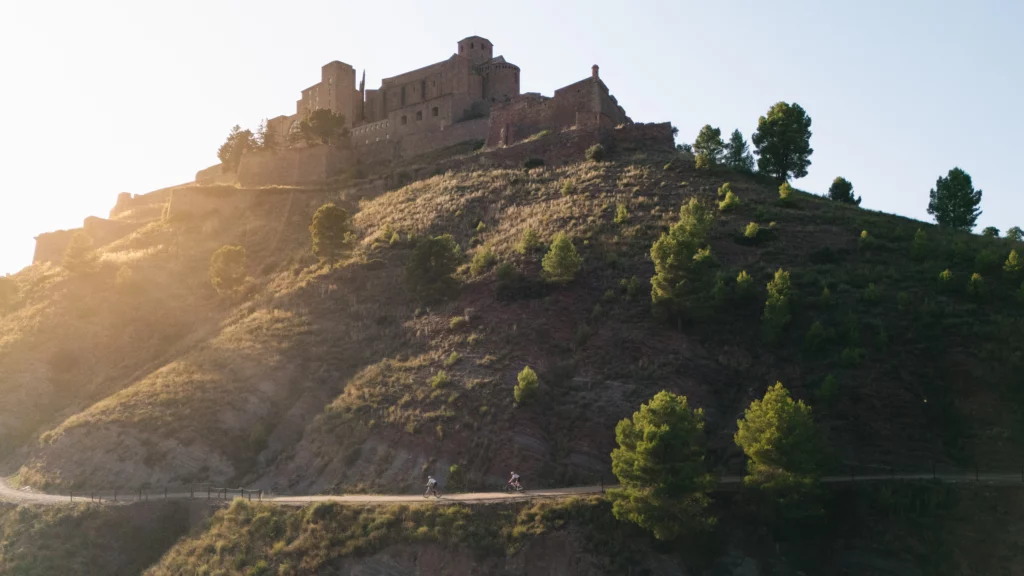
From Sitges, the route heads south towards El Vendrell and Tarragona. A particularly rewarding stretch passes through Foix Natural Park, around its reservoir and beneath Castellet castle. In Tarragona, the journey reaches the Roman city of Tarraco, where the ancient walls and amphitheatre recall the town’s long Roman past.
481 km, 8,316 metres of elevation gain
Tram 2: Tarragona – Lleida
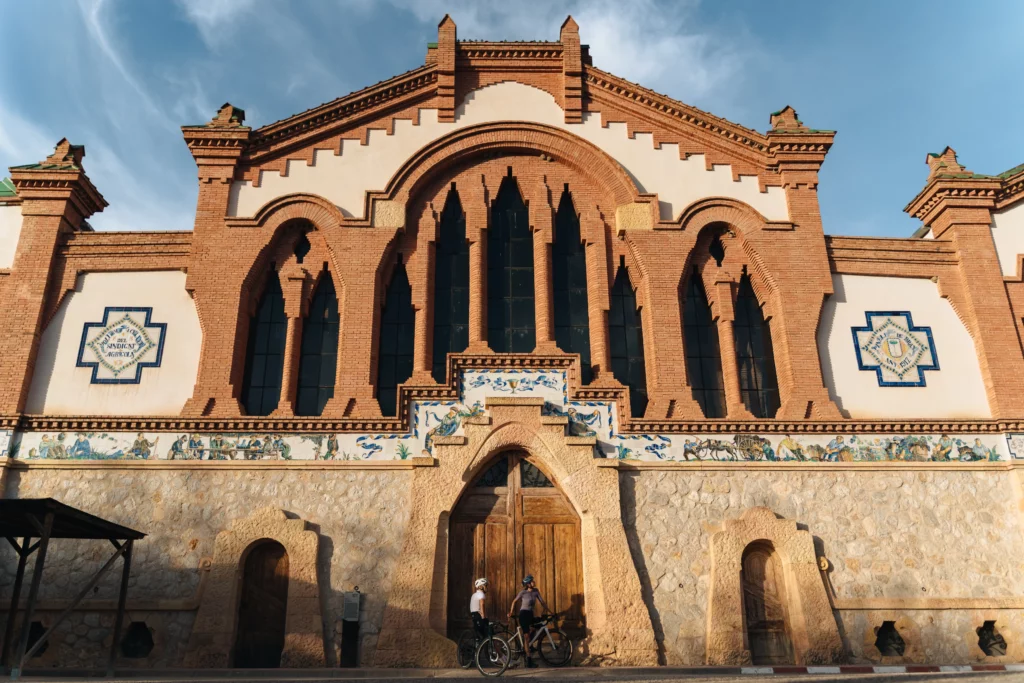
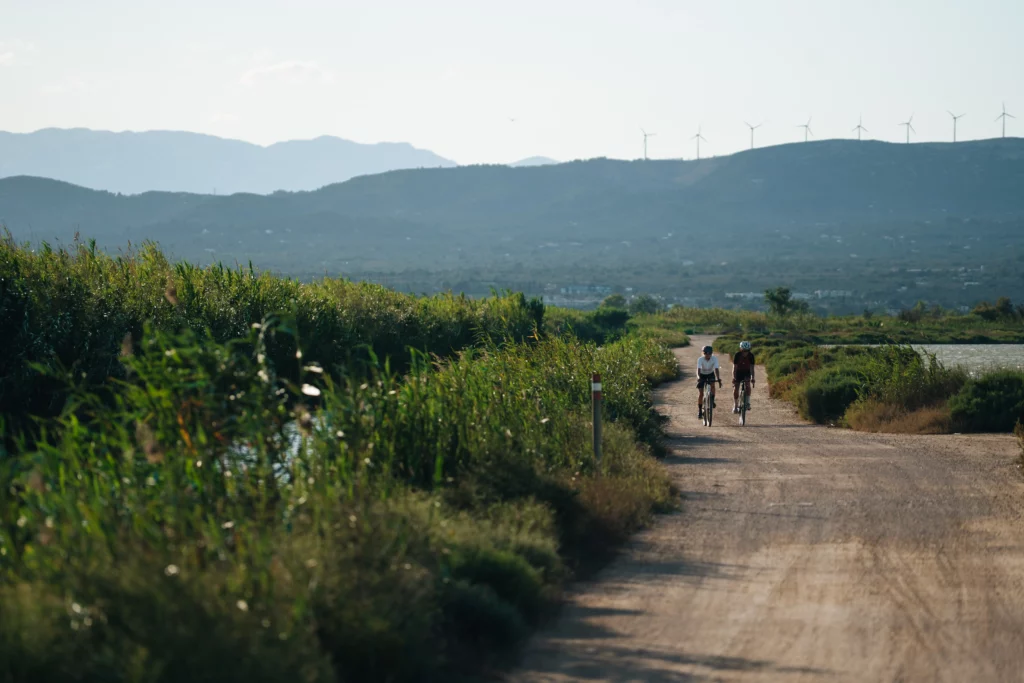
Leaving Tarragona, the route follows the coast towards the Ebre Delta, and the landscape becomes flatter and more open. Near l’Ametlla de Mar, rocky coves and narrow coastal roads give way to the wide horizon of the delta, where canals, lagoons and rice fields stretch towards the sea.
Riding along historic paths
Around the Bassa de les Olles and the Encanyissada lagoon, the tracks are broad and flat, inviting riders to look up and take in the views. Birds move over the water and the colours of the rice fields change with the seasons. The Casa de Fusta, now an interpretation centre, is a gateway to the natural history of the area. Crossing the river towards Sant Jaume d’Enveja and continuing through the fields towards Amposta and Tortosa, the route follows a landscape shaped largely by water management and the region’s traditional farming practices.
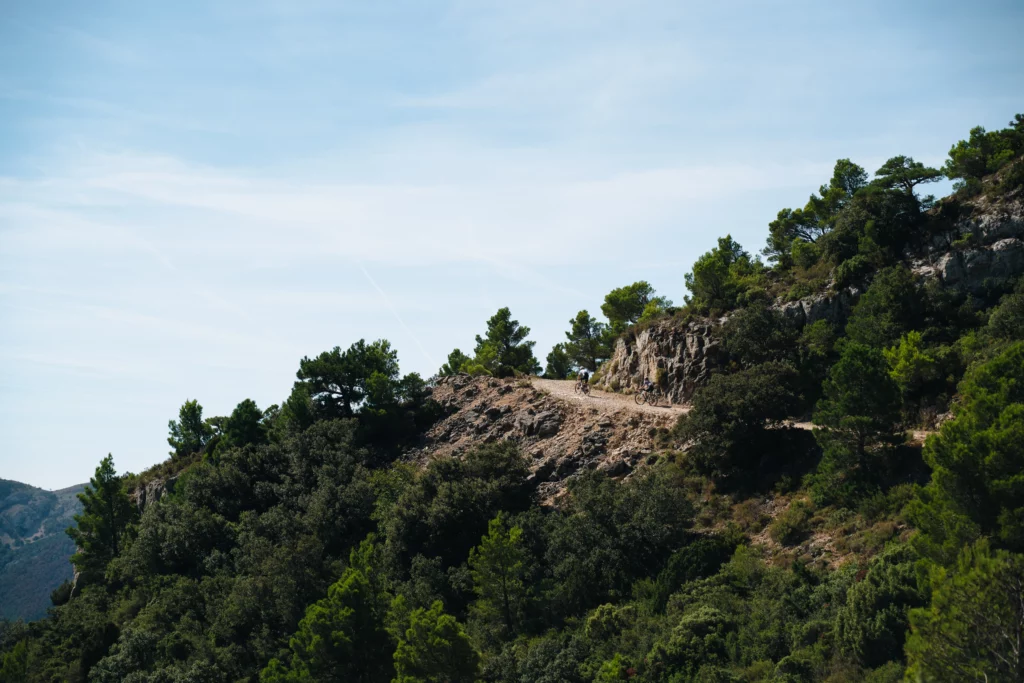
The route then turns inland and follows sections of the old Val de Zafán railway line, now a greenway: one of many former lines in Catalonia’s rail network converted into paths for those travelling on two wheels. Further north, the vineyards and slate hills of the Priorat introduce a different kind of terrain. The climbs are more demanding, and roads and tracks wind through a landscape of terraces and small villages. The names of the wine-growing areas will ring a bell for lovers of red wine, who would be remiss not to sample the local produce after a hard day on the bike.
460 km, 5,961 metres of elevation gain
Tram 3: Lleida – La Seu d’Urgell
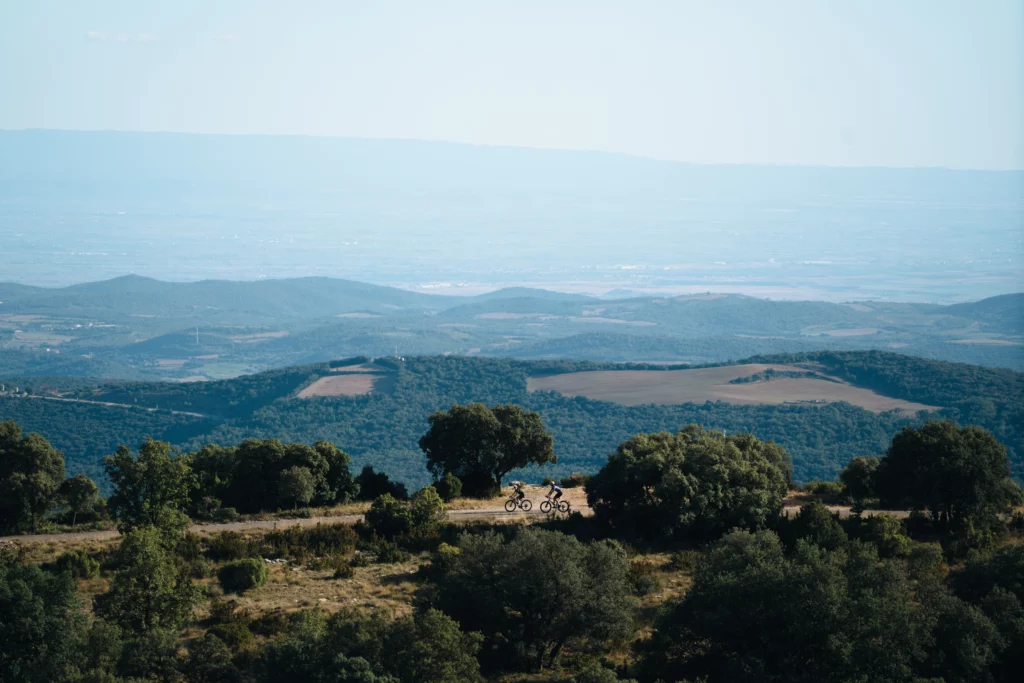
The third section, from Lleida towards La Seu d’Urgell, marks a decisive change in difficulty. The wide agricultural plains give way to the Pyrenean foothills, and then to the high mountains themselves. Following the Segre and the Ruta dels Llacs, riders pass reservoirs and the dramatic landscapes of the Montsec, after which the climbs grow longer and the valleys deeper.
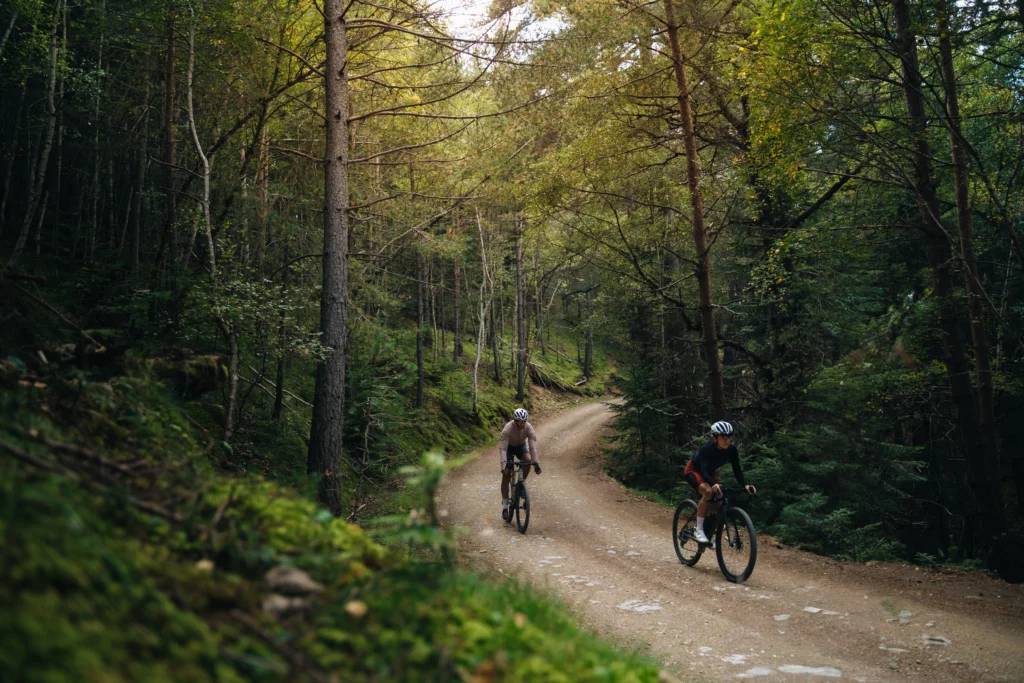
Riding along peaks and endless horizons
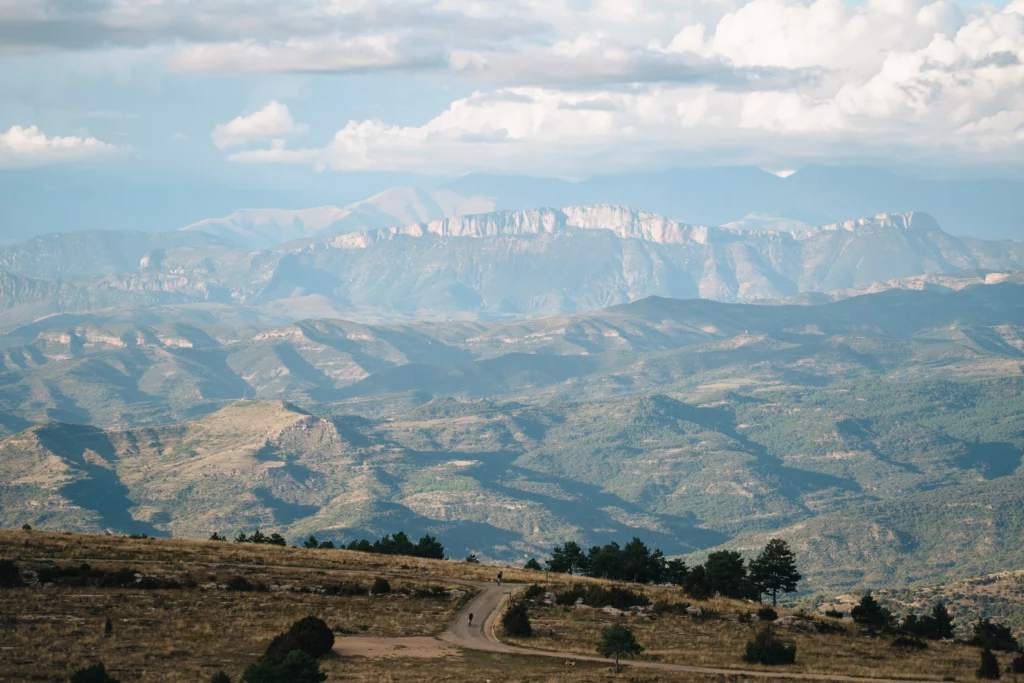
The route reaches the country around the Cadí range and Pedraforca, where limestone walls rise above forests and stone-built villages, offering arguably some of the best views in Catalonia. Continuing northwest, the Val d’Aran and the valleys of the Alt Pirineu reveal yet another Catalonia: an environment and a way of life shaped by the gruelling conditions of the high mountains.
For riders accustomed to the region’s famous road climbs, this is an opportunity to experience the Pyrenees from another angle. The Grand Tour de Catalunya Gravel passes through the valleys and villages that give the mountains their human scale. A stop in a village in the Berguedà, for instance, can be as memorable as a summit, especially when it means finding a local cheese, a hearty traditional dish or a friendly conversation with locals that lasts longer than planned.
491 km, 11,331 metres of elevation gain
Tram 4: La Seu d’Urgell – Figueres
From La Seu d’Urgell the route turns east towards Figueres, gradually leading riders out of the mountains and back to the Mediterranean coast. The route passes through the ever-beautiful Cerdanya and the Cadí-Moixeró area, then on towards the Berguedà.
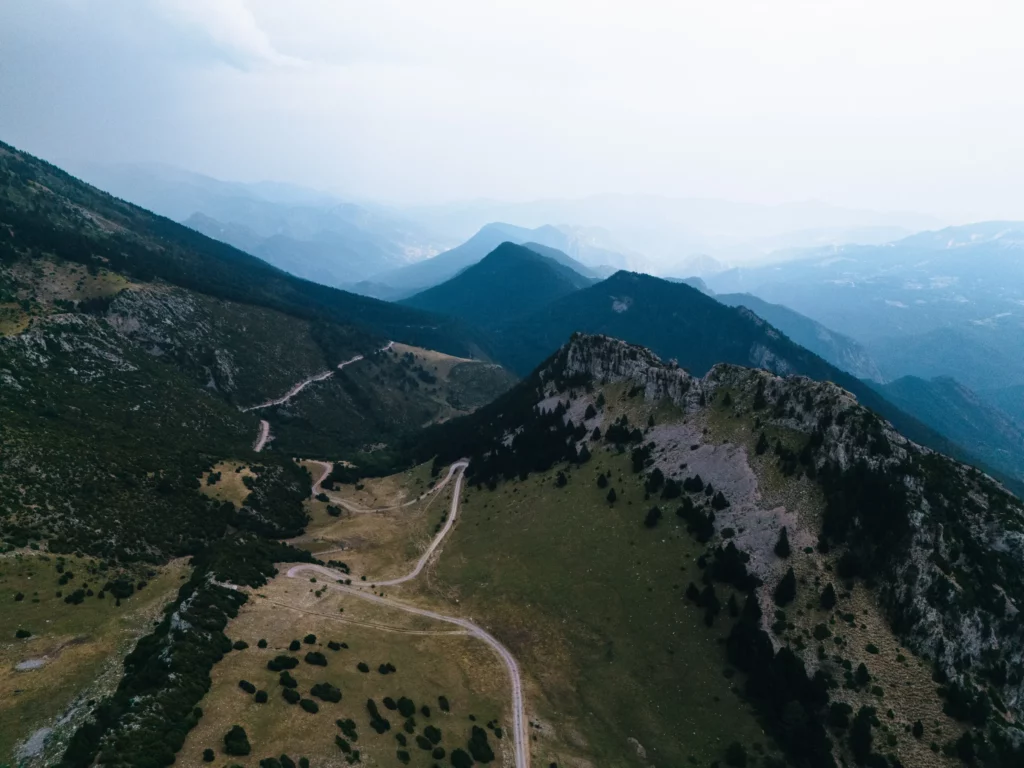
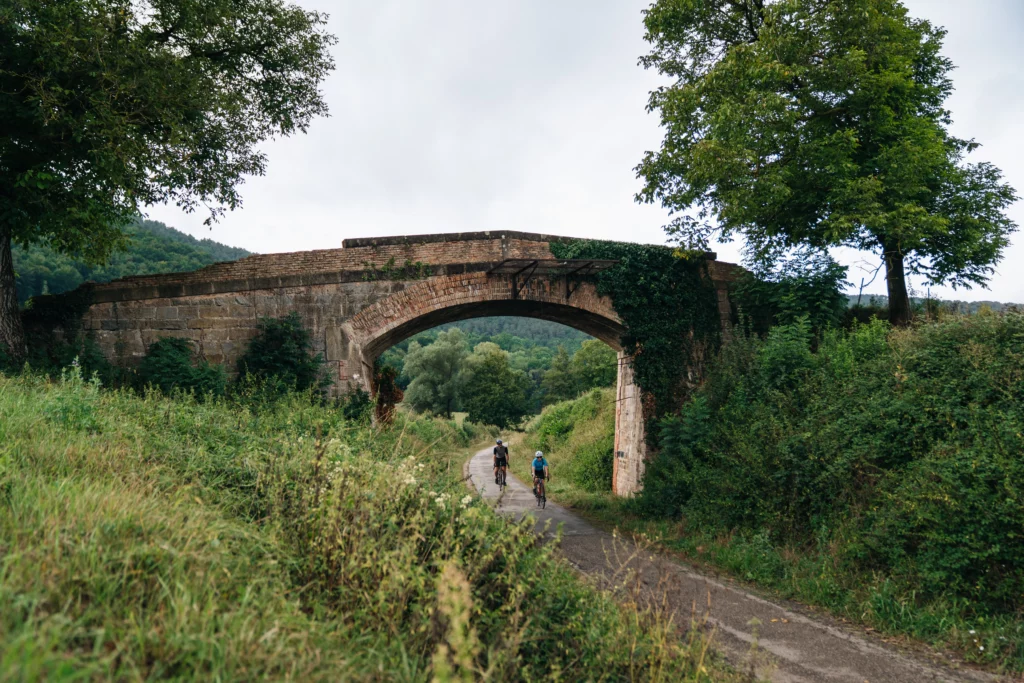
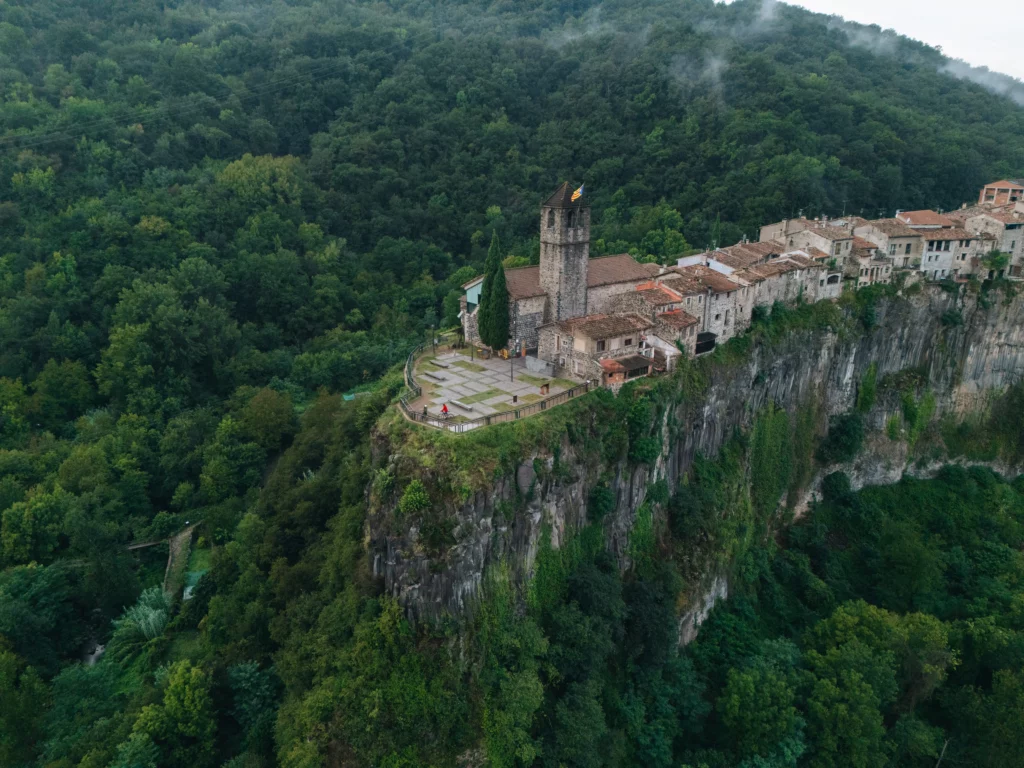
Stages 25 & 26 of the Grand Tour de Catalunya
The village of Gósol is the star of the show as the Grand Tour de Catalunya Gravel passes through the county of Berguedà. Planning a rest day between stages 25 and 26 to fully experience one of the most memorable and authentic Catalan villages is strongly recommended.
By the time you step off your bike in Gósol at the end of stage 25, the light has gone soft and the village has gone quiet. This small Catalan village, overlooked by the massive Pedraforca, provides a befitting setting for a glass of local red, a plate of pa amb tomàquet with cured meats and cheese from the valley, and a hearty dinner to recharge the legs.
Furthermore, a rest day does not have to be completely without a bike. A short, easy gravel loop of just over 6 kilometres follows part of the old royal road that once linked Gósol with Guardiola de Berguedà. You will be riding a path that people used long before anyone thought of gravel. The great Picasso knew this valley too. He spent the summer of 1906 in Gósol, and the work he made here marks a turning point in his career. The loop is a natural rest-day addition to the full Grand Tour de Catalunya, and a good way to wake up the legs before you visit the Espai Picasso in town.
A relaxed lunch afterwards is not a pause in the programme; in Gósol, it is the programme. Locals enjoy seeing visitors experience traditional Catalan cuisine without looking at a watch. Your legs will thank you for it, not only today but also the morning after. Nevertheless, if you feel fit and want to mix up the sports during your Grand Tour de Catalunya, the mountain of Pedraforca offers a phenomenal 17-kilometre circular walk around its base.
Crossing the Berguedà
Stage 26
When the time comes to continue the journey and say goodbye to Gósol, stage 26 descends along the road to Saldes. The final section follows the Via del Nicolau, a gravel path that threads through the forest, with gentle gradients connecting old train tunnels and a 35-metre suspension bridge over the Bastareny river.
The Via del Nicolau was built between 1914 and 1916 by Tomás Nicolau Prieto, owner of a sawmill, to carry timber from Gisclareny down to Guardiola de Berguedà. The narrow-gauge line fell out of use in the 1930s. Today the old railway line is a path again, and a pleasant one to ride, because trains never climb too steeply.
Catalonia has many railways that have become gravel paths, many of which are included in the Grand Tour de Catalunya, yet the Via del Nicolau is one of the most beautiful. Together with the Pedraforca, the Cadí and a landscape that rewards riding slowly, the experience in Gósol confirms once again that the Berguedà is a cycling jewel in Catalonia’s crown.
404 km, 8,289 metres of elevation gain
Tram 5: Figueres – Barcelona
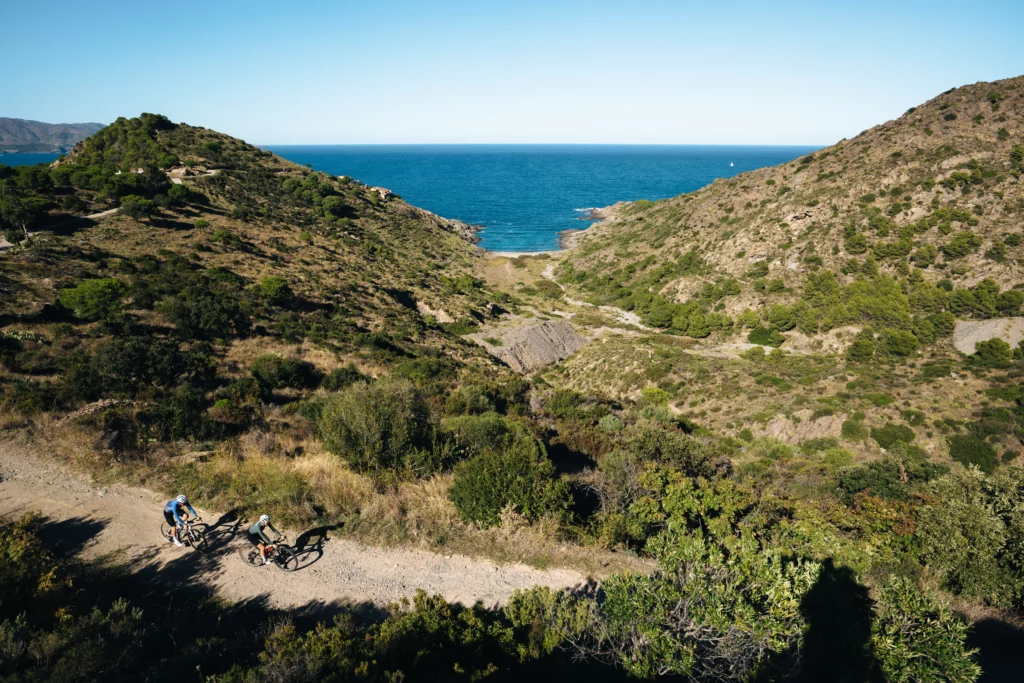
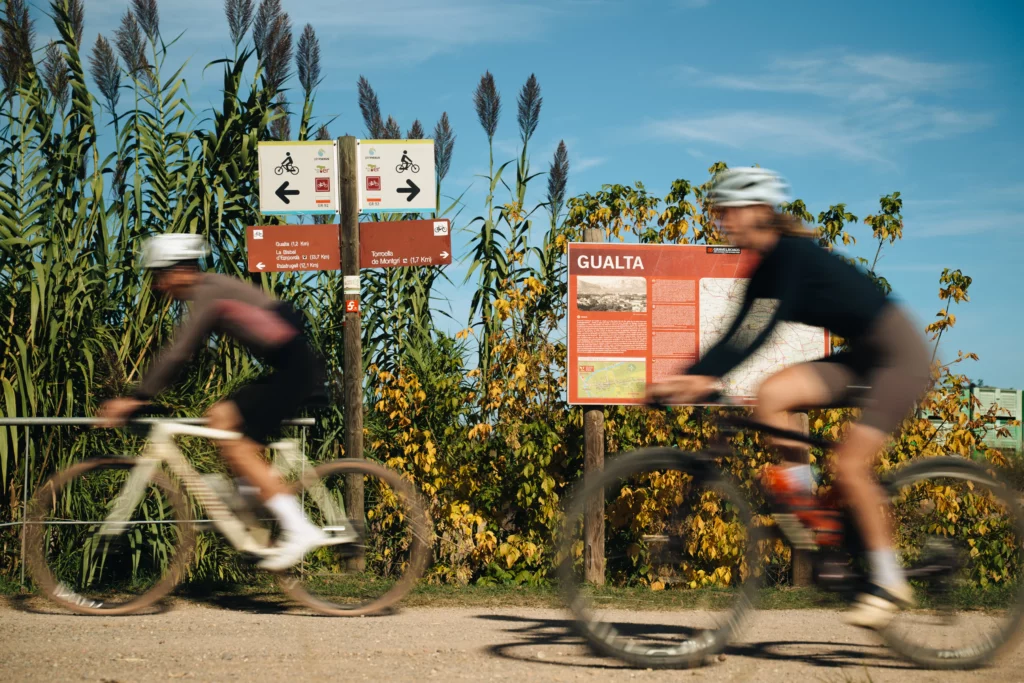
Having reached Figueres, the route continues towards the coast and the Empordà, a part of the route not to be missed. Quiet medieval villages like Pals, Peratallada and Monells, and the peaceful wetlands of the Aiguamolls de l’Empordà, offer a sharp contrast to the more touristy coastline.
Riding from surrealism to modernism
Near Cap de Creus, the terrain becomes rougher and more exposed. The landscape is shaped by wind, rock and a constant battle between mountain and sea.
The stretch between El Port de la Selva and Castelló d’Empúries captures this struggle particularly well: a demanding, rather rocky passage through the natural park, followed by the open fields and canals of the Empordà plain. The last section leads riders south-west towards Montseny Natural Park, before the final approach back to Barcelona’s Plaça Catalunya through the Vallès and Collserola.
652 km, 10,504 metres of elevation gain
The pleasure of the connections
The 42 stages make it possible to divide the journey into manageable chunks, but the numbers should not dictate how it is ridden. Some cyclists will want to link several stages into long days on the bike; others may prefer to come back on different trips to complete the route, or even use public transport to reach a new starting point. Flexibility is part of the idea: the route can be downloaded free of charge from the official website and ridden by anyone, whenever they choose.
For a cyclist who already knows Catalonia, the most interesting discoveries may be the more modest ones: a path alongside a reservoir, a village square at lunchtime, a greenway winding through the trees or a view of the sea from a ridge that has never featured on any of their usual road routes. The major landmarks are all there, from Montserrat and the Ebre Delta to Pedraforca and Cap de Creus. But they are connected by lesser-known roads and places, and by everyday landscapes that rarely feature in videos or lists of the best cycling routes.
That is where the value of this journey lies. It offers a way to cross Catalonia without limiting the experience to its most famous mountain passes, beaches or cities, while still letting cyclists start and finish stages in towns with accommodation and good food. It follows old paths and rural connections that are already part of the landscape, and gives them a new purpose.
When the trails of Collserola lead back towards Barcelona, the distance covered will be measured in much more than kilometres. By the end of the journey, Catalonia will no longer be just a territory on the map, but a collection of landscapes, stories and experiences that you will have lived first-hand.
Related stories