
Ernesto Abad, locked onto the road ahead for innovation with ISB Sport
Founded in 1971, ISB Sport is an Italian brand focused on bearings for both industry and sport. In 1992, following the closure of its bearing factory due to economic pressure and growing competition from Asian manufacturers, the company gradually relocated to Barcelona. There, it established a hub to maintain and grow the brand into what it is today, with a strong and innovative presence in the Catalan cycling scene.
ISB Sport sees Barcelona as an international design hub and a gateway to connect its innovative project with investors and young talent emerging from Catalan schools. In addition, the brand receives support from the Generalitat and the Light Mobility Cluster. The company also launches social projects in the Barcelona area: one focusing on public school transport services, the other centering on energy generation in sports facilities through a system patented by ISB Sport, based on a unique bike model.

“Fortunately, there are still industries in the cycling world that continue to invest in our country, specifically here in Catalonia, Barcelona and the rest of the region,” says ISB Sport CEO, Ernesto Abad, pointing at the ever-growing Asian manufacturing.
Trifecta
While the brand continues to grow in the Barcelona area, it also expands within the cycling market, bringing innovation to bearing technology. ISB Sport defines this innovation as the combination of three key areas.
First, lubrication. ‘It’s the big hidden ambush’, as people often call it, says ‘Tito’. “Every part of the bike where bearings are fitted should be lubricated with a specific grease. Fortunately, brands are already working in this area, sometimes in collaboration with bearing brands and, above all, chain brands.”
Second, in bearing production, ultrasonic cleaning is what makes it possible to reach the desired level of quality. “Today, small ultrasonic cleaning machines represent a major step forward, allowing mechanics to deliver a much higher standard of professional service,” Abad explains.

Lastly, antioxidant materials, because material evolution is one of the key aspects of innovation, according to Abad. “Producing stainless steel is very expensive and, fortunately, developments originated in the agricultural and food industries have led to the production of black oxide. With this micro-layer of phosphate, just two microns on the surface of the outer ring, the steel is protected, effectively transforming chromium steel into a material mix with improved corrosion resistance.”
“In recent years, across any sport industry, the leap forward is almost like comparing the internet to AI,” Abad adds. “Thanks to Formula 1, MotoGP and aerospace, we’ve learned that materials account for about 95% of product evolution. Design, geometry and everything else make up the remaining part.”
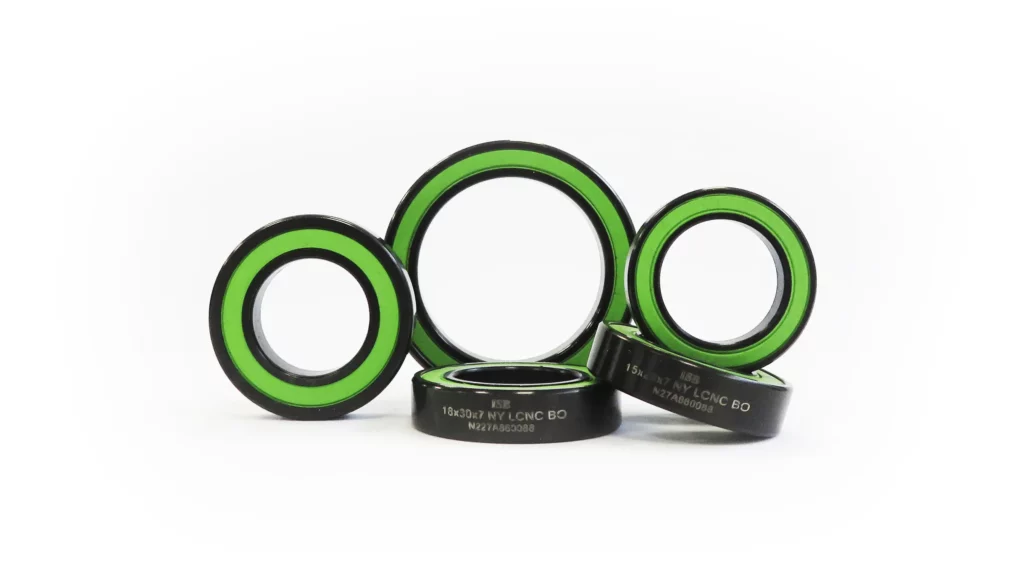
So where does innovation currently sit in the bearing industry? Ceramic bearings. As Abad explains, the term is often used incorrectly, as these bearings can be hybrid or fully ceramic. They originate in CNC machine tools, where spindles rotate between 25,000 and 55,000 rpm while remaining stable under extremely high temperatures.

These bearings combine special steel, ball cages made from a specific phenolic material, ceramic balls (Si3N4), and high-temperature grease, making this small component the true “star of the show.” This high-precision bearing is certified for Formula 1 and aerospace applications, among others, as it does not overheat and avoids performance loss due to increased friction.
Bearing testing, from paper to bike
ISB Sport carries out bearing testing across multiple racing disciplines, including XCM, XCO, downhill and enduro, working closely with the teams it sponsors. This is one of the reasons the brand supports athletes across different disciplines, creating a solid testing base through races and real-world conditions. At the same time, these competitions help Abad and his team to obtain approvals for the bicycle brands used by these teams in production.
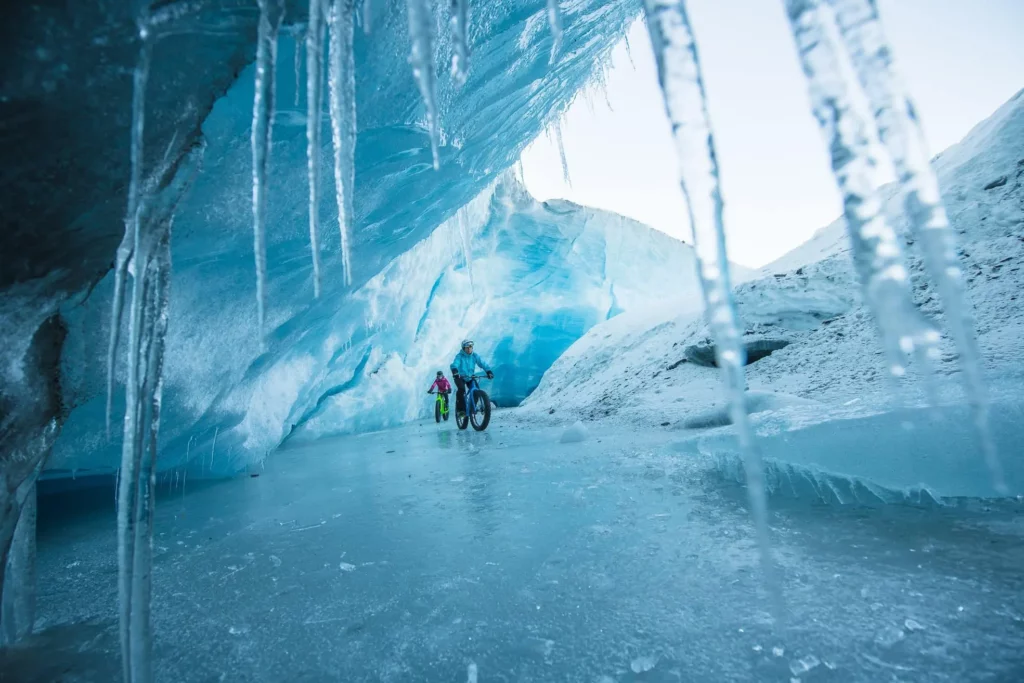
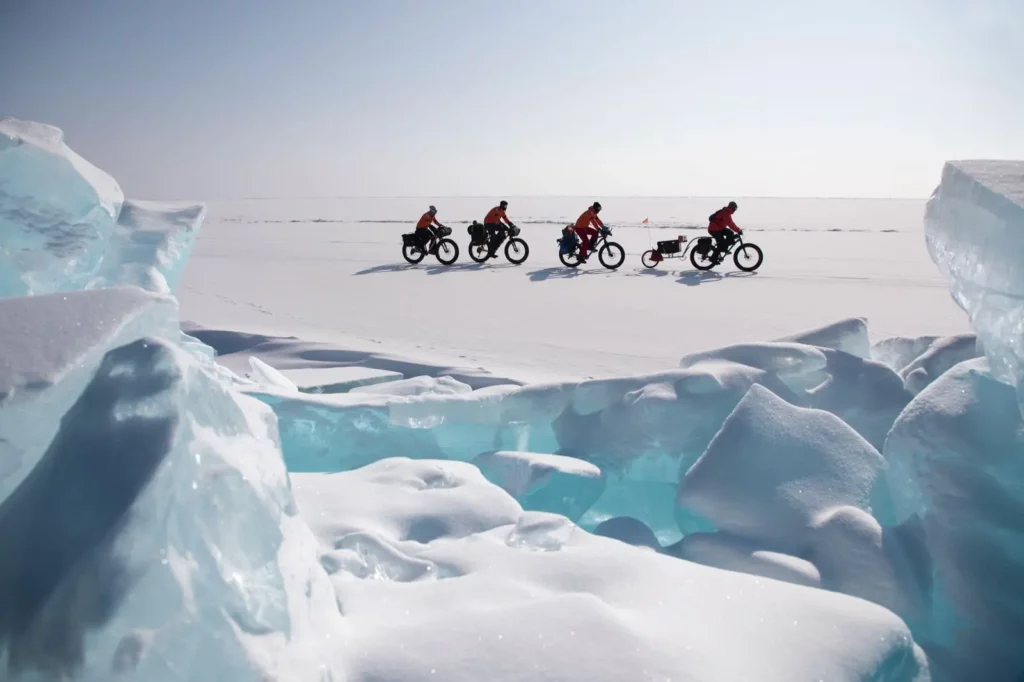
“One of the most authentic testing experiences we’ve carried outwas crossing Lake Baikal in southern Siberia on fat bikes,” says Abad. “Temperatures dropped to minus 20 to minus 30 degrees, and we spent six days in constant contact with water, snow and ice. At night, wheels, bottom brackets and headsets would no longer rotate, as the
cold locked everything up. For that adventure, grease selection and material choice, especially stainless steel, were essential, and the test was 90% successful.”
Innovation, next steps
Innovation is already here, but what comes next? Abad explains that bearing evolution from a design perspective is complex and largely driven by major multinationals. For ISB Sport, the challenge lies less in new designs and more in securing future production.
“It’s true that air bearings already exist, with zero friction, using a thin film of pressurised gas to create a low-load interface,” Abad says. “But the real issue today lies in raw materials and supply.”
ISB Sport sets its goals for the next five years in attracting young talent from new generations and building departments dedicated to innovation and sustainability. “Innovation flows from people,” Abad believes. Abad also confirms that ISB Sport remains firmly locked onto the road ahead for innovation.
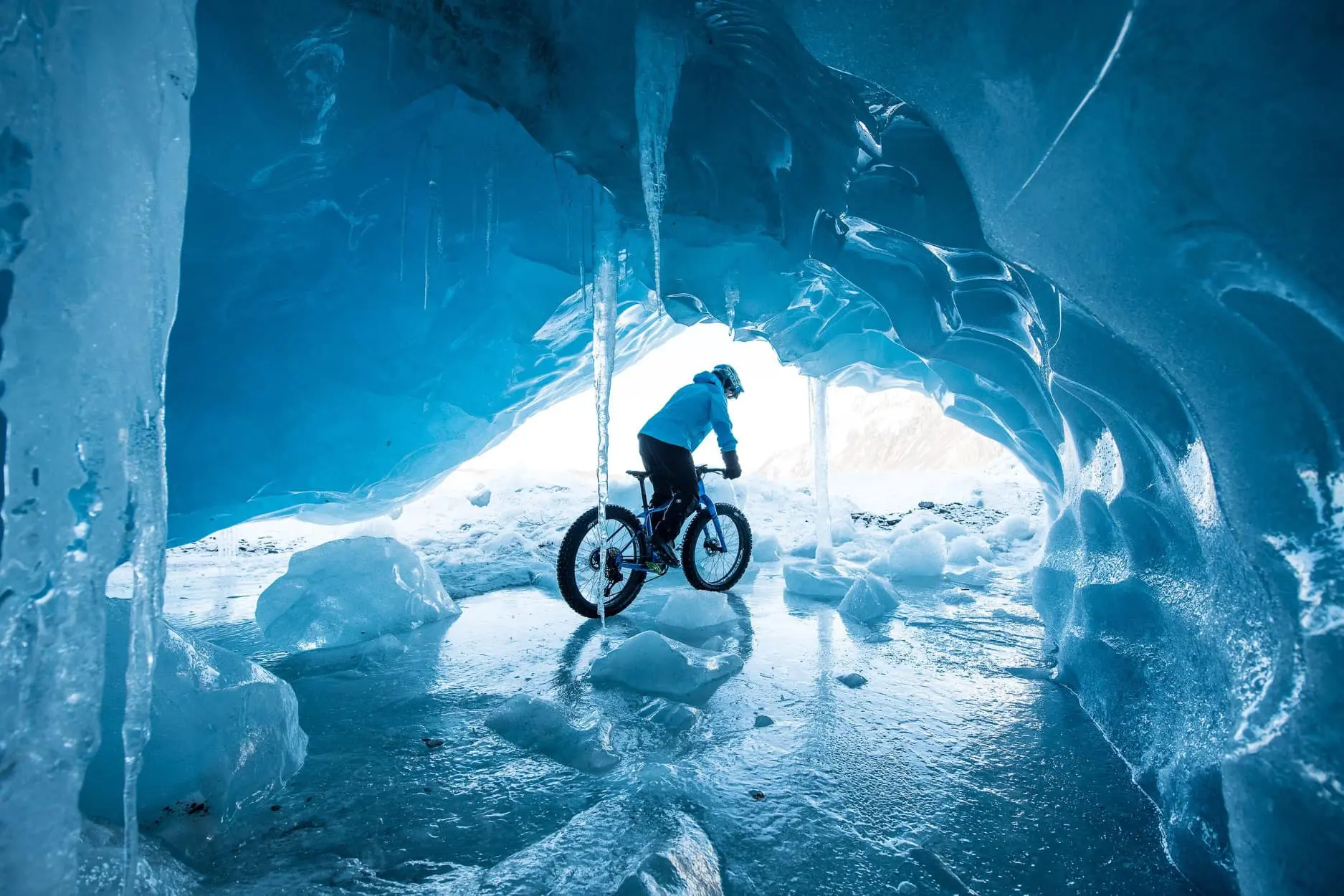
“We’ve been working for several years on the Helyos by ISB Bike or Trike project. Now in its final design and innovation phase, the goal is to achieve a World Speed Record. It would be a first major step in positioning ISB Sport internationally within the cycling sector.”
ISB Sport teams up with elite naval engineering experts to turn theoretical calculations into reality. The road ahead may twist unpredictably, but supporting young female and male talent remains a core pillar of the brand.
This commitment takes shape through its U23 squad, ISB Factory Cyclistwork XCM, while parallel business units continue to grow around R&D, sustainability and future development.

Related stories