

(Re)discovering Gironès on two wheels
Girona and the Gironès region have established themselves in recent years as one of the most attractive destinations to discover by bike. A region that is becoming increasingly connected, making cycling safer, more accessible and more enjoyable for everyone. The new connections around the Ter River, such as the section between Girona and Celrà and the new bridge between Bescanó and Sant Gregori, open the door to discovering a mosaic of natural landscapes and villages full of character.
More than simply connecting places, the Gironès cycling path network invites everyone, from experienced road cyclists to families looking for a relaxed day out, to explore the region on two wheels. Routes pass through welcoming villages, rich cultural heritage and diverse landscapes, offering a different perspective on the Gironès, where cycling and everyday life increasingly go hand in hand.

River Ter
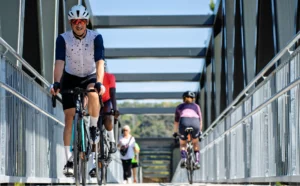
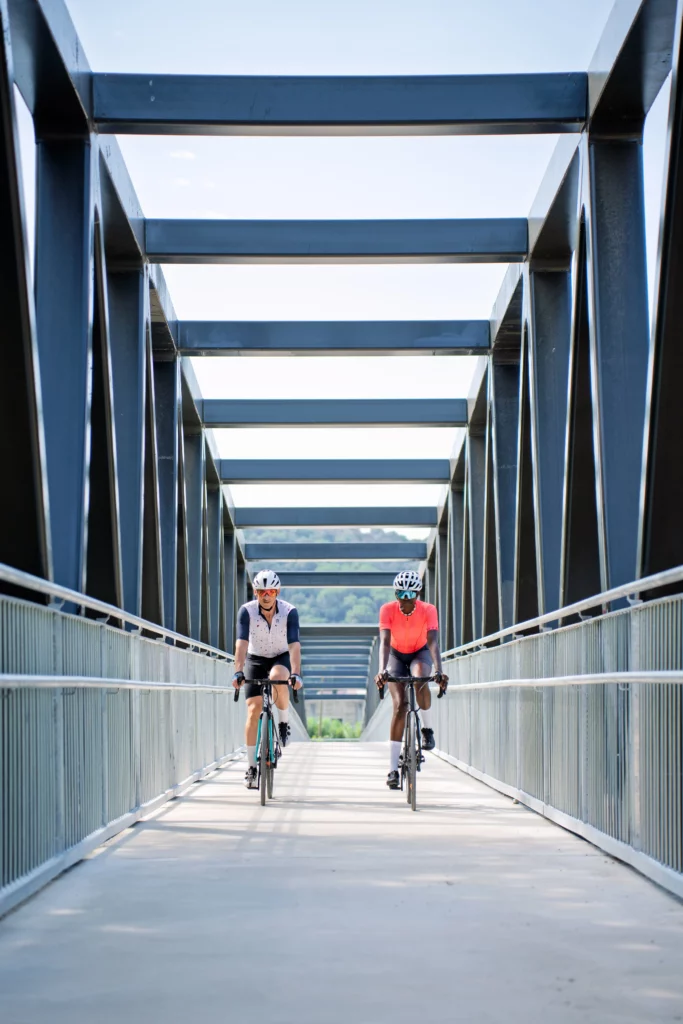
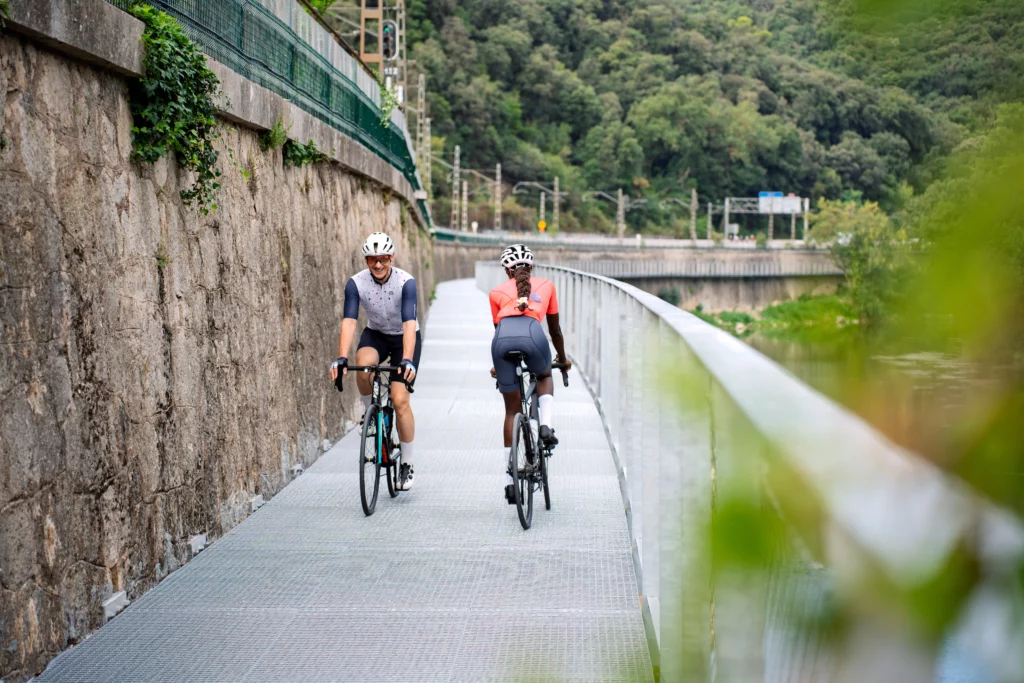
Opened in July of this year, the new bridge over the River Ter between Girona and Celrà is a remarkable piece of infrastructure that opens up new and safer route possibilities. The new bridge allows cyclists to continue following the River Ter downstream to explore the riverside landscape and safely reach villages such as Bordils, Sant Joan de Mollet and Flaça. Before the bridge was built, cyclists previously had to use the busy C-66, which regularly led to dangerous situations, an investment in cycling infrastructure from the Diputació de Girona, Generalitat de Catalunya in collaboration with local municipalities that benefits (re)exploring the Gironès a lot.
Around the same time, a direct connection between Bescanó and Sant Gregori was opened, to be officially inaugurated in September 2026, linking two parts of the county that previously required long detours or the use of roads with heavy motor traffic. The new link provides a safe and direct connection to the Ruta del Ter, the Carrilet Greenway and the Vall de Llémena for gravel cyclists, families and runners alike.
Many of these villages in the Gironès hold cultural, historical, natural and gastronomic heritage that often goes unnoticed. Discovering these by bike is probably the best way to do so.
Bike for instance to Celrà, that comes first as you head northeast along the Ter. It brings you close to the striking Pagans factory, a Modernist industrial complex now home to La Fàbrica cultural centre. From here, continue on quiet rural roads towards Flaçà, where the Ter, the old village and its industrial past come together. Follow the river through a landscape shaped by water and industry, then explore the historic centre, with its church of Sant Cebrià and old houses. The route around Flaçà offers a glimpse of how the Ter once provided both the landscape and the resources that supported local industry, while today its riverside paths invite you to slow down and explore.

In opposite way, westwards from Girona, Salt has more to explore than you might first think. The Monar Canal, for instance, tells the story of how water once powered the Coma Cros textile factory, now transformed into a creative and educational centre with a library and the Water Museum. The Deveses de Salt offers a shady green corridor beneath poplars, willows, plane trees and other riverside vegetation.
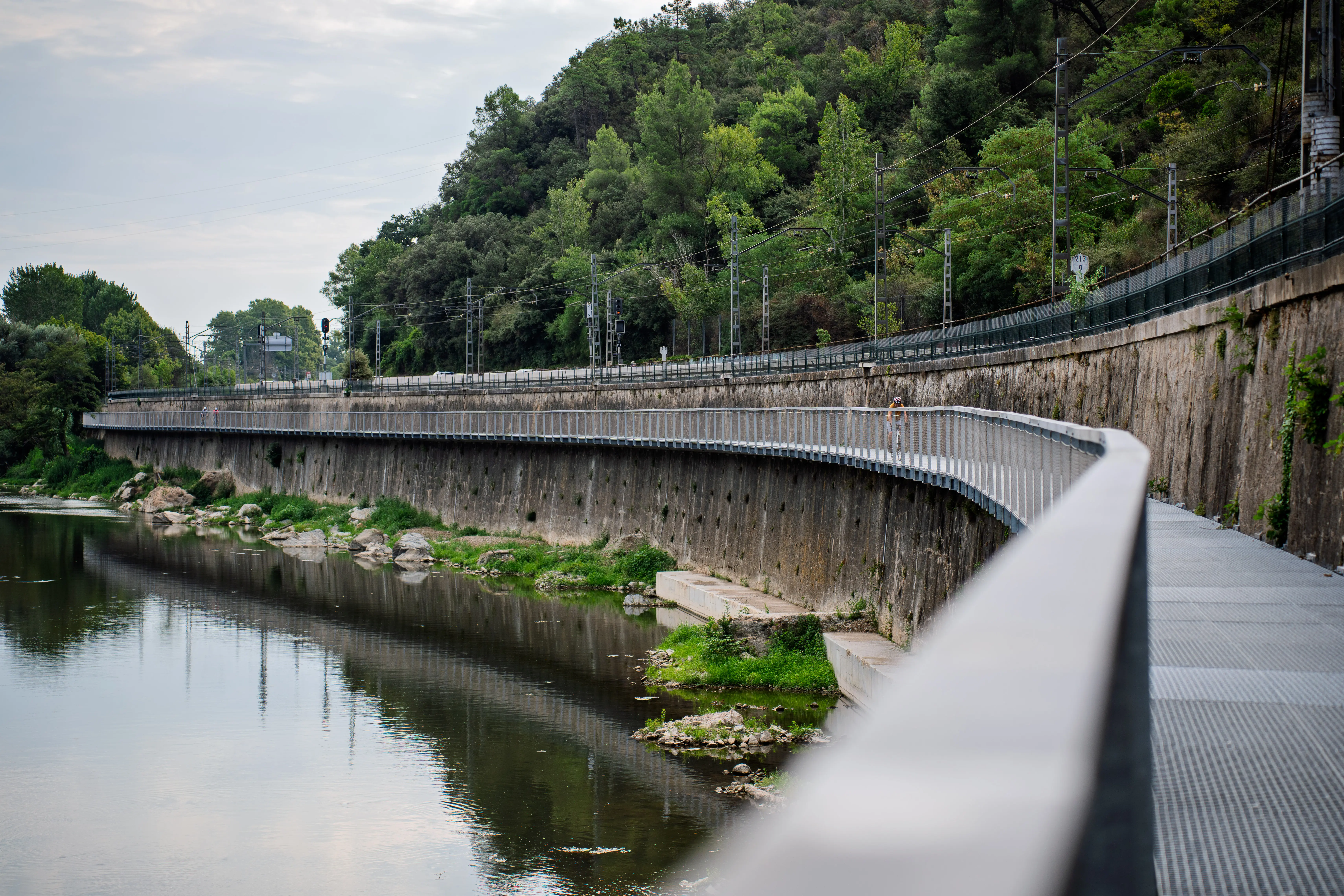
Continue along the Ter towards Bescanó, where the river becomes a reminder of the area’s industrial relationship with water. The hydroelectric power stations here are part of that heritage, harnessing the flow of the Ter to generate electricity and standing as distinctive landmarks along the river, visible from the cycle route. From Bescanó, the landscape shifts between water, forest and open countryside before the route leads towards Sant Gregori, the gateway to the Vall de Llémena, where quiet roads open into rural Girona, passing farmhouses, forests and historic villages.
Wider-reaching bike routes
From Girona city, several other cycling routes are also well worth exploring. The best known is probably the Carrilet Greenway, which connects the urban areas of Bescanó, Salt, Girona, Quart, Llambilles, Cassà de la Selva and Llagostera.
The 35-kilometre Pla Gironès Sud Greenway is another successful initiative. This route connects the villages of Fornells de la Selva, Llambilles, Campllong, Sant Andreu Salou and Cassà de la Selva, linking directly with the Carrilet Greenway towards either Girona or the Costa Brava.
The Farmhouses Route (Ruta de les Masies) connects the villages of Vilablareix and Aiguaviva and is perfect for discovering the agricultural landscape.
Finally, the Tren Pinxo Route connects Girona with Banyoles via Sarrià de Ter and Sant Julià de Ramis, home to two of the province’s most important archaeological sites, before continuing into Pla de l’Estany.
Commitment
The Gironès is committed to creating new gateways into its municipalities and encouraging visitors to discover places they might otherwise pass by, helping to spread tourism more evenly across the county.
The main cycling routes in the Gironès are managed by organisations including the Consorci de les Vies Verdes, the Consorci del Ter and local municipalities.
Collectively the routes form an interconnected network that will continue to expand in the years ahead, allowing people on bikes to explore the area, its emblematic villages and beautiful landscapes in even better ways.
Related stories