

Race preview: Vuelta a España in Catalan-speaking areas
The Vuelta a España is set to visit Font Romeu (France), Andorra, Priorat and Tarragona before heading into the Valencian Community. Here’s a preview of stages 4 to 6.
Just like the Giro d’Italia and the Tour de France, the Vuelta a España also starts outside its home country. Monaco hosts the opening stage of the third Grand Tour of the year, from where the peloton makes its way through France into Andorra and the Catalan-speaking regions. The first encounter with the Catalan language comes in the high-altitude training destination of Font Romeu, which hosts what can be considered the race’s first mountain-top finish, featuring more than 30 kilometres of climbing in the final 40 kilometres.

Stage 4
The following day, the racing remains spectacular. Andorra hosts the entire fourth stage of the Vuelta, starting and finishing in Andorra la Vella. It is a day designed for the climbers, with four categorised climbs packed into just 106 kilometres. Fireworks are guaranteed.
From the capital, the peloton immediately climbs through the parish of Encamp, renowned for its outstanding road cycling and mountain biking routes. The Port d’Envalira (24.4 km at 5.5%) is the first summit of the day. The riders remain in the parish of Encamp to tackle the Collada de Beixalis (6.5 km at 8.6%), before descending to Ordino, climbing the Coll d’Ordino (9.9 km at 7.0%), and returning to Encamp.
The Alto de la Comella (3.8 km at 5.4%) offers the final opportunity to make a difference after more than 3,000 metres of climbing before the finish in Andorra la Vella.
Stage 5
After a transfer from Andorra into Catalonia, the Vuelta continues with a relatively flat stage connecting Falset and Roquetes. It appears to be a day for the sprinters, provided they have recovered from the climbing in Andorra, although the second half of the stage is far from straightforward.
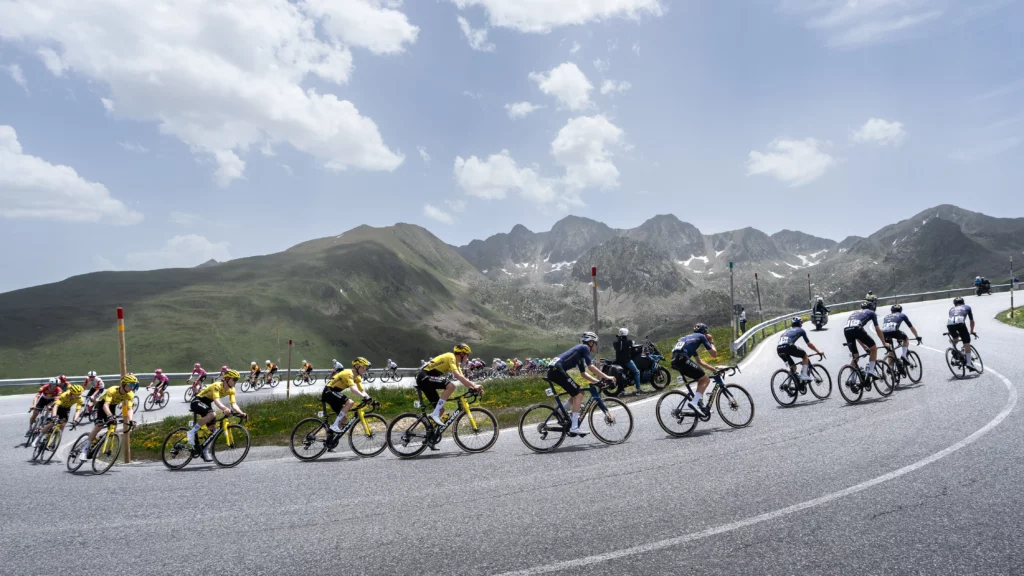
Although only one climb is categorised, most of the stage’s 1,659 metres of elevation gain comes in the closing kilometres, with six climbs, including a Category 3 ascent, packed into the final 50 kilometres. The finish itself is flat, potentially encouraging the pure climbers to save their energy for the following day, which offers an ideal opportunity for attackers.
Stage 6
Stage 6 has “day for the breakaway” written all over it. Starting in Alcossebre, part of Spain’s Valencian-speaking region, the route begins with rolling terrain that is ideal for forming the day’s break. After several categorised climbs, the demanding Puerto del Bartolo (9.1 km at 7.2%) and its steep, technical descent are likely to create decisive gaps. Not only because of the gradients, but also because the final section of the climb is on gravel.
Related stories